The Busyness Trap
Marcus answered 114 messages yesterday. Cleared every ticket, updated every spreadsheet, stayed late. And this morning his manager asked what he's actually been working on.
Part 1: The Busyness Trap — Concept
+5 XP on completion

Marcus answered 114 messages yesterday. Cleared every ticket, updated every spreadsheet, stayed late. And this morning his manager asked what he's actually been working on.

Busyness is the most respectable disguise for standing still. You can burn a full tank of fuel flying in circles and still call it a mission.

The insight nobody pins to the breakroom wall: activity and contribution are different currencies. One pays in comfort, the other in impact. Guess which one your calendar defaults to.

Here's how the trap locks: every completed task gives you a small dopamine receipt. Your brain files it under 'progress.' Over time you start optimizing for the receipt instead of the result — and you don't even notice the swap.

Marcus finally tracked one week of his time — not what he planned to do, but what he actually did. Forty-six hours logged. Nine of them connected to anything his team would remember in six months. The other thirty-seven were just keeping the lights on and calling it flight.

The trap is real, but it has a seam. Once you can sort your hours into 'keeping the lights on' and 'work that actually lands,' you can start shifting the ratio. In Part 2, you'll practice a simple time audit to find where your real contribution hides. See you there.
Part 2: The Busyness Trap — Practice
+10 XP on completion

Busyness is a costume that looks like contribution from a distance. Today you learn how to take it off and see what's actually underneath.
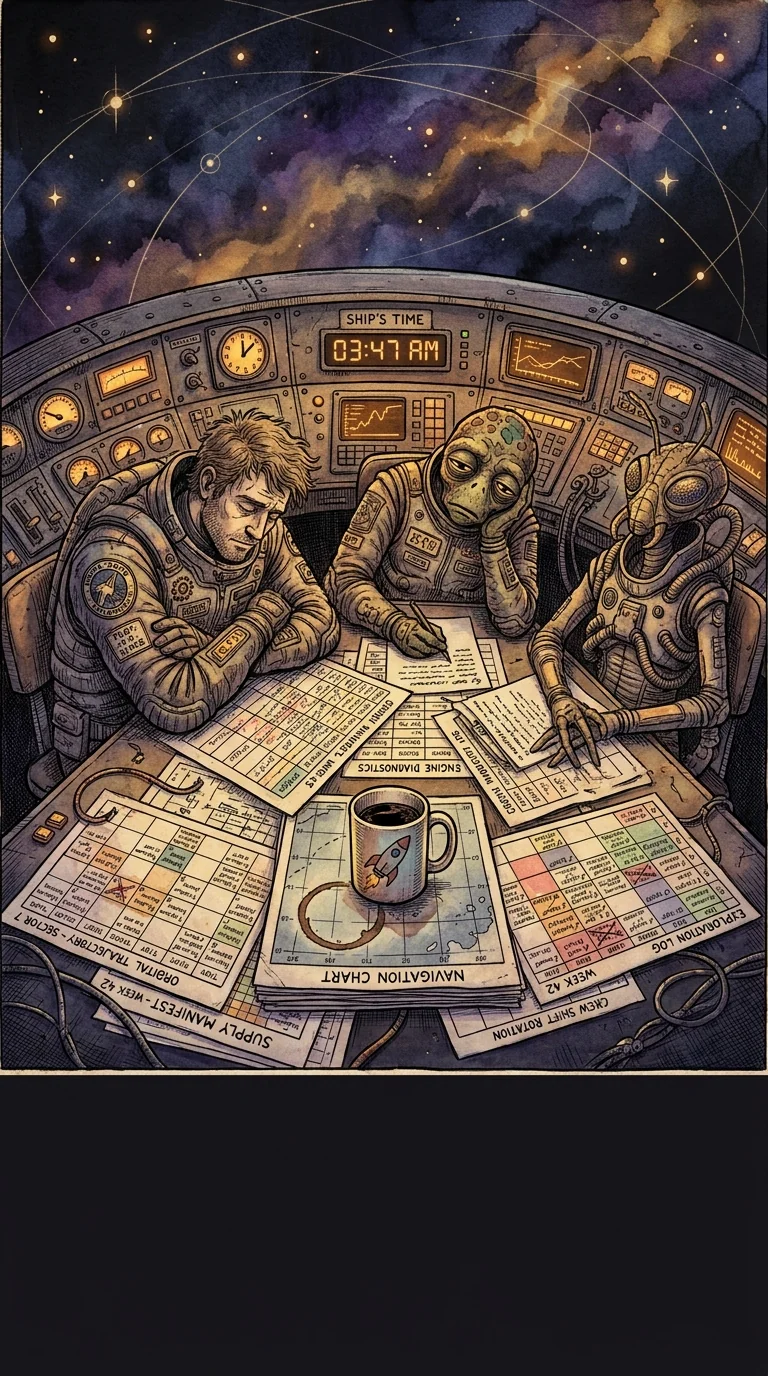
The default move is to audit your time — track every fifteen-minute block like a suspicious accountant. But a full calendar doesn't tell you which items actually mattered. It just confirms you were awake.
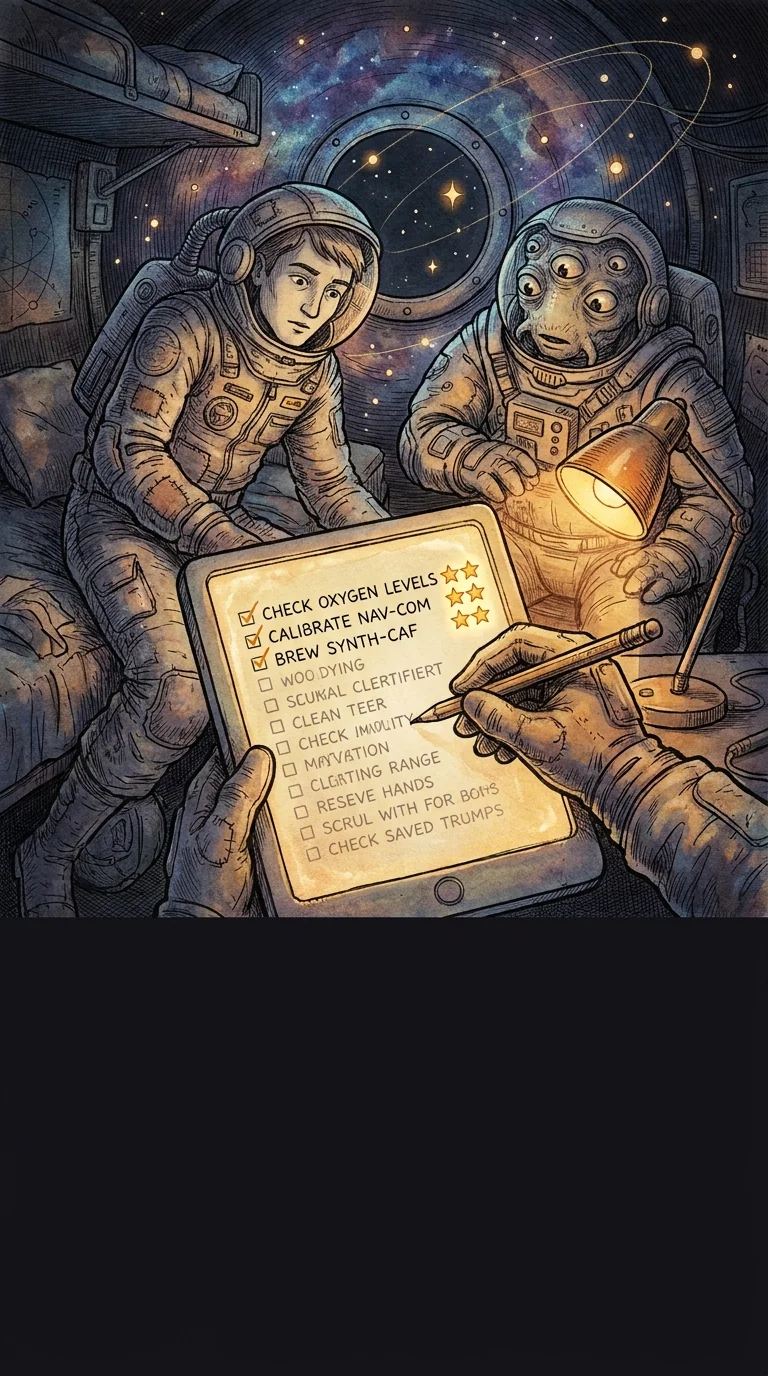
Instead, try what I call the Three-Star Audit. At the end of each day, look at everything you did and mark exactly three items that someone else would have noticed if you hadn't done them. Three. Not ten. Not "all of it."

Do it for five days running. By day three, you'll notice a pattern — probably three or four activities keep earning stars, and a whole graveyard of tasks never do. That graveyard is your busyness costume. The stars are your actual signal.

Lisa ran her Three-Star Audit for a week at a supply depot on Calloway Station. Twelve-hour shifts, always slammed. By day four she realized her stars kept landing on the same two things: catching inventory errors before they shipped, and training new hires who stayed past ninety days. Everything else was just motion.

Five days. Three stars each. You're not tracking your time — you're finding where you actually matter. That distinction changes everything that comes next.